
Akron Previous Residents by Era
An address history uses several records because each one answers a limited question. The Summit County Fiscal Office Property Tax & Appraisal search anchors the present parcel. The Summit County Fiscal Office, Recording Division records instruments that can establish a transfer chain. ASCPL directories and criss-cross books identify historical listings by name or address. Census schedules, maps, obituary indexes, and probate material add date-specific context. A parcel owner is not automatically every person listed at that address, and a directory listing is not a deed.
Start with the era. A post-1988 recorded transfer can begin in the Recording Division web search. Earlier instruments belong in the Index Book Archive Viewer, library deed-index microfilm, or the office’s public-computer and copy routes. For the people layer, digitized Akron directories begin in 1859, later books are at Special Collections, and released federal census schedules currently reach 1950.
| Source | Years It Covers | Where Held | What It Shows |
|---|---|---|---|
| Recording web documents | 1988-present | Fiscal Office Recording Division | Recorded instrument chain |
| Index Book Archive Viewer | 1840-1988 | Fiscal Office | Older indexed instruments |
| Library deed indexes | 1840-1914 | ASCPL microfilm | Grantor/grantee continuity |
| Digitized city directories | 1859-1969 | ASCPL and Internet Archive | Name and historical street listing |
| Federal census | 1790-1950 currently public | NARA and library databases | Household snapshot on census dates |
Note: Read the coverage date on every Akron source before treating a search miss as an endpoint.
Akron Previous Residents Begin Here
Use the Summit County Fiscal Office Property Tax & Appraisal search to locate a current parcel by address number and street, owner, parcel, route, or ZIP. Preserve the selected tax year, parcel number, GISID or account, situs address, and lot information. The portal’s owner mailing address is a tax-correspondence field. It must not be labeled as the person’s home at the Akron property.
Next, use the Summit County GIS Viewer to confirm the parcel’s map position and parcel identifiers. The map can help distinguish nearby lots and later splits, but an ownership statement should be confirmed through the property record and recorded instrument. This sequence keeps physical location, tax data, and transfer evidence separate.
A historic address can be less stable than the parcel. When an old number differs from a current one, retain cross streets, lot, subdivision, and legal description rather than forcing a name match. The address is a search entry point. The parcel and its document trail are the durable bridge.
Akron Previous Residents Before 1988
Summit’s recorded-document route has a useful local split. The Recording Division e-recording guidance states that browser document search begins in 1988, while the Index Book Archive Viewer reaches 1840-1988. Public computers remain available in the fourth-floor Customer Service Area. An older web-search miss can therefore reflect the access layer, not the absence of a deed.
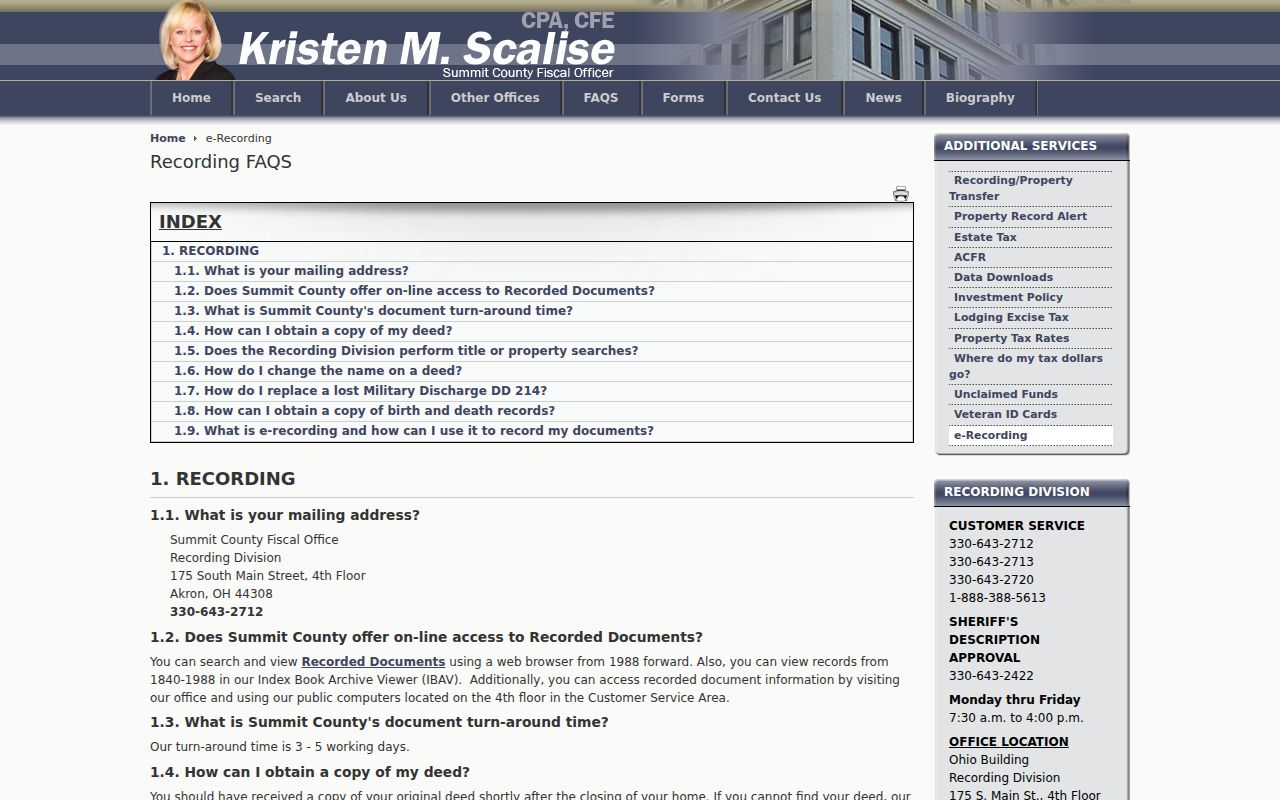
The Recording Division’s separate web and archive routes give a practical handoff for an address trail crossing 1988.
The office also accepts mail-copy requests and provides counter access; it does not perform a title search for the requester. The index is a guide to the underlying document, so spelling variants, party roles, document numbers, and legal descriptions matter. A formal title determination remains outside this research process.
The Recording Division fee schedule distinguishes copies, certification, recording, and transfer charges.
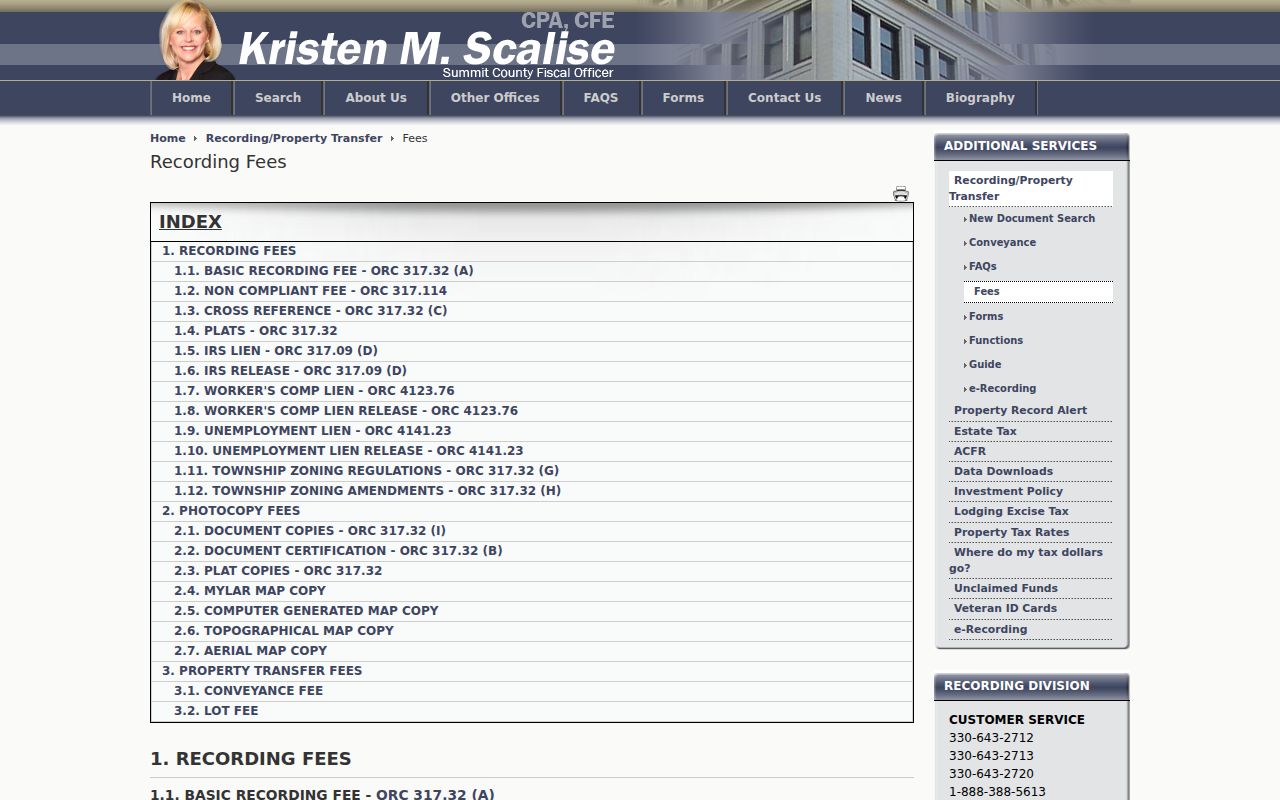
The fee page supports choosing the right copy channel instead of treating a recording or conveyance fee as a document-copy charge.
Akron Previous Residents and Deeds
A deed chain follows the parcel backwards, not simply a street name. Start with the current parcel and owner, locate the most recent recorded deed, and read the document’s parties, recording date, instrument type, document number or book and page, and legal description. Then use the seller’s prior acquisition and the same legal description to locate the earlier link. The current owner’s name may be a grantee on the most recent deed; the seller is the grantor on that transfer.
- Record the property-search query, selected tax year, parcel or account, GISID, situs, and lot details.
- Find the newest deed in the Recording Division document search using the owner and legal description.
- Record the grantor, grantee, instrument type, recording date, document placement, and legal description from the document or counter copy.
- Search the seller as a prior grantee and test the same legal description for that earlier acquisition.
- Repeat backward, moving to IBAV or ASCPL microfilm when the chain reaches the older access period.
- Grantor / grantee
- The grantor transfers an interest; the grantee receives it in the recorded instrument.
- Chain of title
- The sequence of recorded transfers and related instruments used to trace an interest in a parcel.
- Legal description
- The lot, block, subdivision, metes-and-bounds, or other land description used in a deed. It can outlast a street-number change.
Note: Preserve party roles as printed, because reversing grantor and grantee can reverse the backward trail.
Akron Legal Description Trail
A legal description is often the best answer when a historical address does not line up with a current number. The Recording Division’s property-transfer process reviews the legal description before a new deed records. Compare lot, block, subdivision, parcel or GIS ID, cross streets, and map evidence. If a plat or split changes the description, preserve both descriptions and the document links rather than discarding the older form.
For a pre-1840 tract, the jurisdiction can change as well. Summit County was erected and organized in 1840. Research before that point may move into Portage, Medina, Stark, or Trumbull records for territory later included in Summit. ASCPL identifies predecessor-county grantor material for 1795-1840 and Summit grantor/grantee indexes from 1840-1914.
The Summit County Historical Society collection supplies collection and local-history context; ASCPL Special Collections is the document and directory access route described in the research.
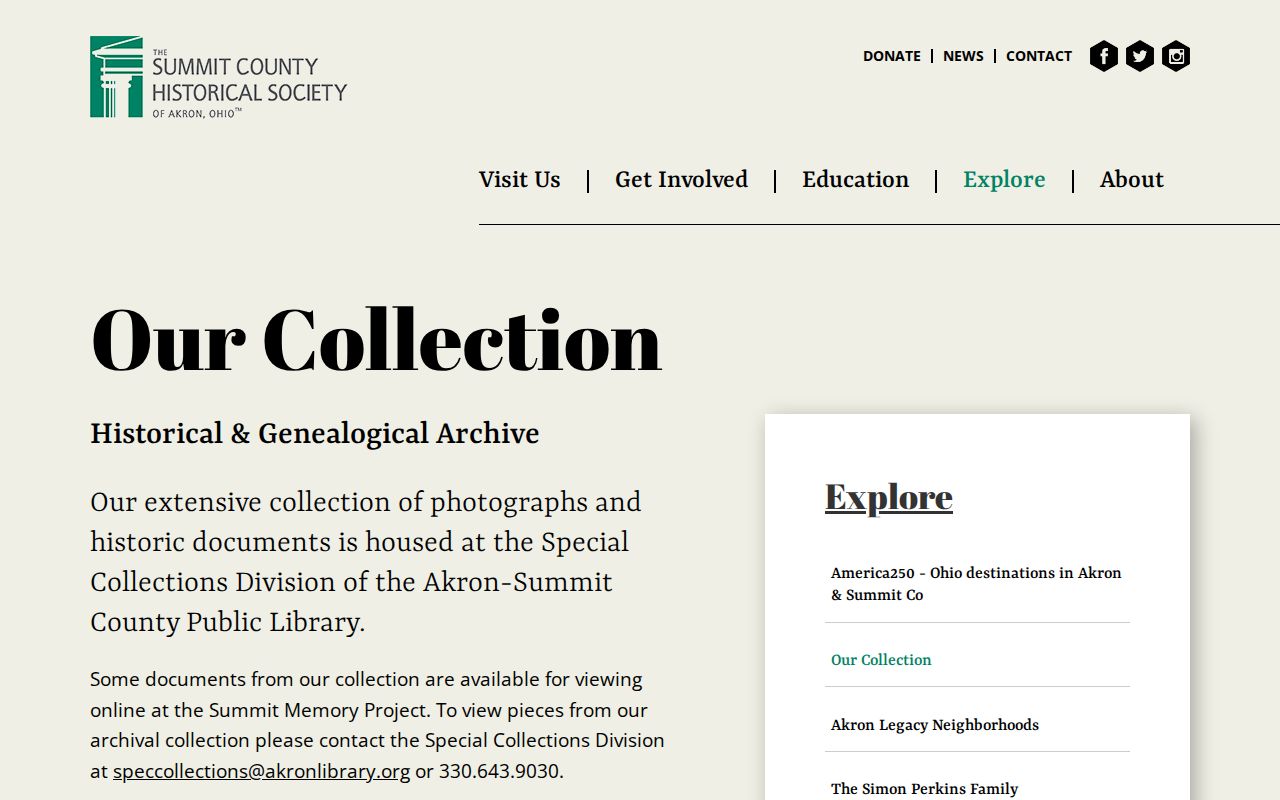
Collection context can help frame an address story, while parcel, deed, and directory sources must remain the evidence for specific claims.
Akron Previous Residents in Directories
Deeds establish a transfer trail, but they do not name every historical person listed at an address. For that layer, use the ASCPL genealogy collections, digitized Akron directories, and the Haines criss-cross volumes in Special Collections. The criss-cross books provide the local address-to-listed-person fallback, although the library has not published an exact Haines year run. Telephone directories are available from 1914 under the collection statement.
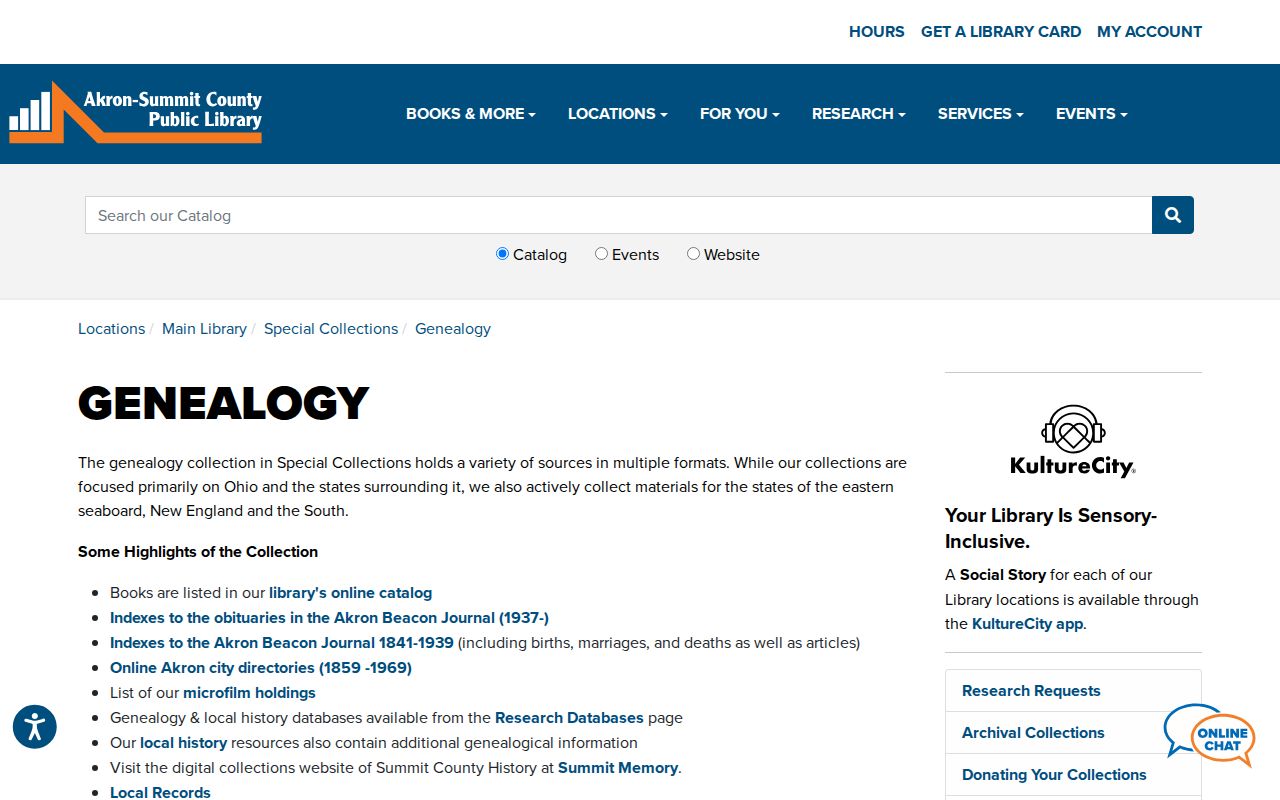
The library collection route keeps the historical listing work separate from the current parcel and recorded-deed trail.
Pair a directory year with the released census schedule nearest to it. Search the surname and initial in sequential alphabetical volumes, note the address and relationship wording exactly, then test that address in the same year’s street section or a criss-cross volume. Compare the next and prior editions. A census is a dated household snapshot, not an annual address log, so it fills intervals rather than replacing the directory sequence.
- Choose the directory edition closest to the address date.
- Copy the printed name, address, spouse reference, occupation, and abbreviations.
- Check the street or criss-cross section for the address in that period.
- Compare the preceding and following available directory editions.
- Use the released census, deed legal description, and obituary or estate material only for the question each source can answer.
Akron Previous Residents on Sanborn
Sanborn maps test the setting of an address, not the identity of the people listed there. ASCPL holds Akron Sanborn microfilm for 1886, 1892, 1916, 1920, 1923, 1930, and 1940. The Library of Congress 1886 Akron Sanborn provides an online entry point for the 26-sheet map. A sheet can show whether a building footprint existed, its use, and its period street layout.
This makes a Sanborn map useful when a directory number changes, a corner is uncertain, or a record refers to a structure that later changed. Compare the street orientation, cross streets, lot description, and directory timing. Do not infer residents from a map or fill a gap with an unverified citywide renumbering event; the research located no authoritative Akron renumbering year.
Note: A Sanborn sheet dates a place and layout, while a city directory dates a historical listing.
Akron Previous Residents at Probate
The address trail can end in a life event rather than another directory entry. ASCPL’s Akron Beacon Journal obituary indexes cover the newspaper series from 1937 forward, including predecessor titles. The earlier subject-index route covers 1841-1939 with partial early indexing. A cited obituary can be requested from the library. Probate material can identify estate or relationship leads where a file exists, but it should not be used to assume who lived at an address.
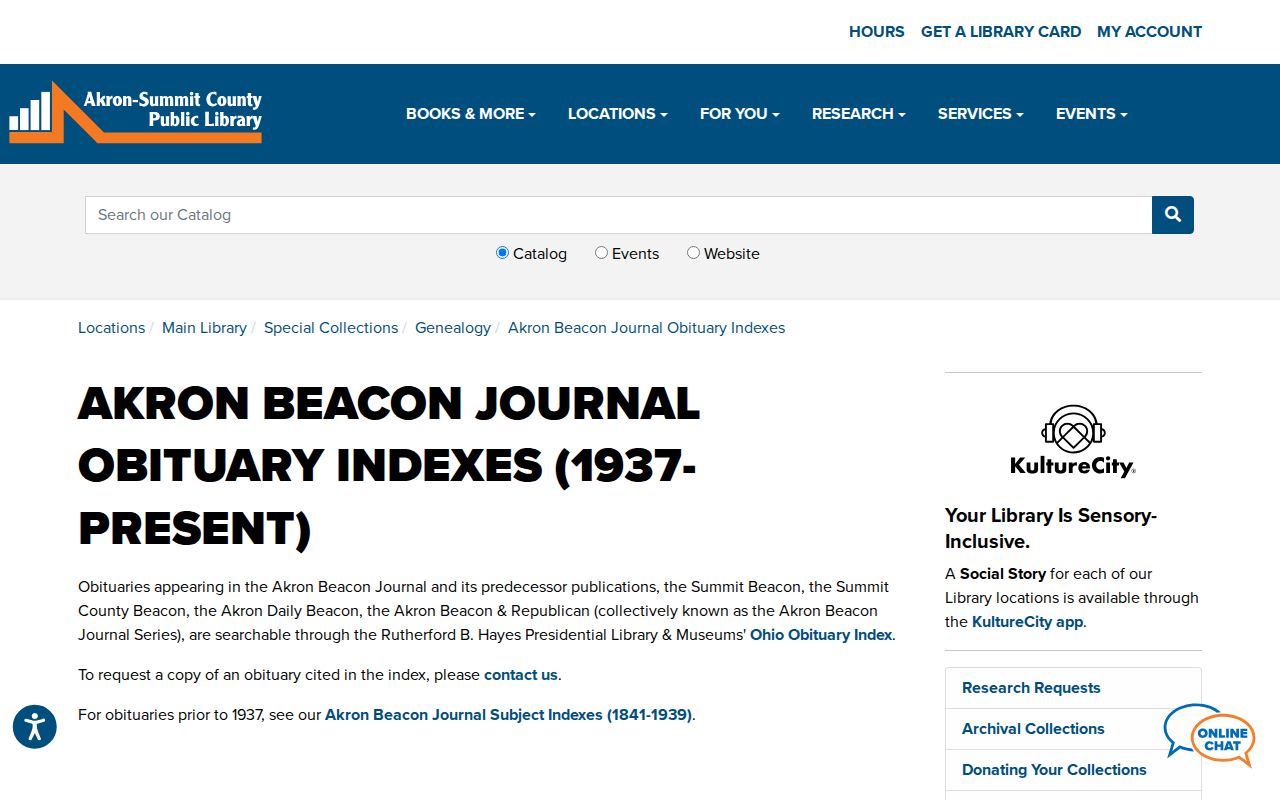
An obituary index gives a dated follow-up path after a directory or deed finding, not a replacement for the address evidence.
ASCPL Local Records also identifies cemetery, funeral-home, probate, and naturalization material. Summit probate microfilm includes historical marriage, estate, guardian-docket, will, and probate-journal runs. These sources can confirm a research lead through the holder’s stated access rules.
Lawful use. Akron previous-resident research is for family history, property history, estate questions, and personal curiosity. Do not use a historical address trail to stalk, harass, or track a living person.
Akron Past Residents and Archives
When a directory or deed leaves an unanswered historical question, ASCPL keeps the practical fallback chain in one place: digitized directory volumes, later Special Collections books, deed-index microfilm, telephone directories, newspaper indexes, census resources, estate material, and Sanborn maps. Each has a different coverage period and access path. The library asks that closed-stack material be requested in advance and offers limited research-request service.
ASCPL’s local historical-records page identifies the relevant cemetery, probate, and local family-record holdings.
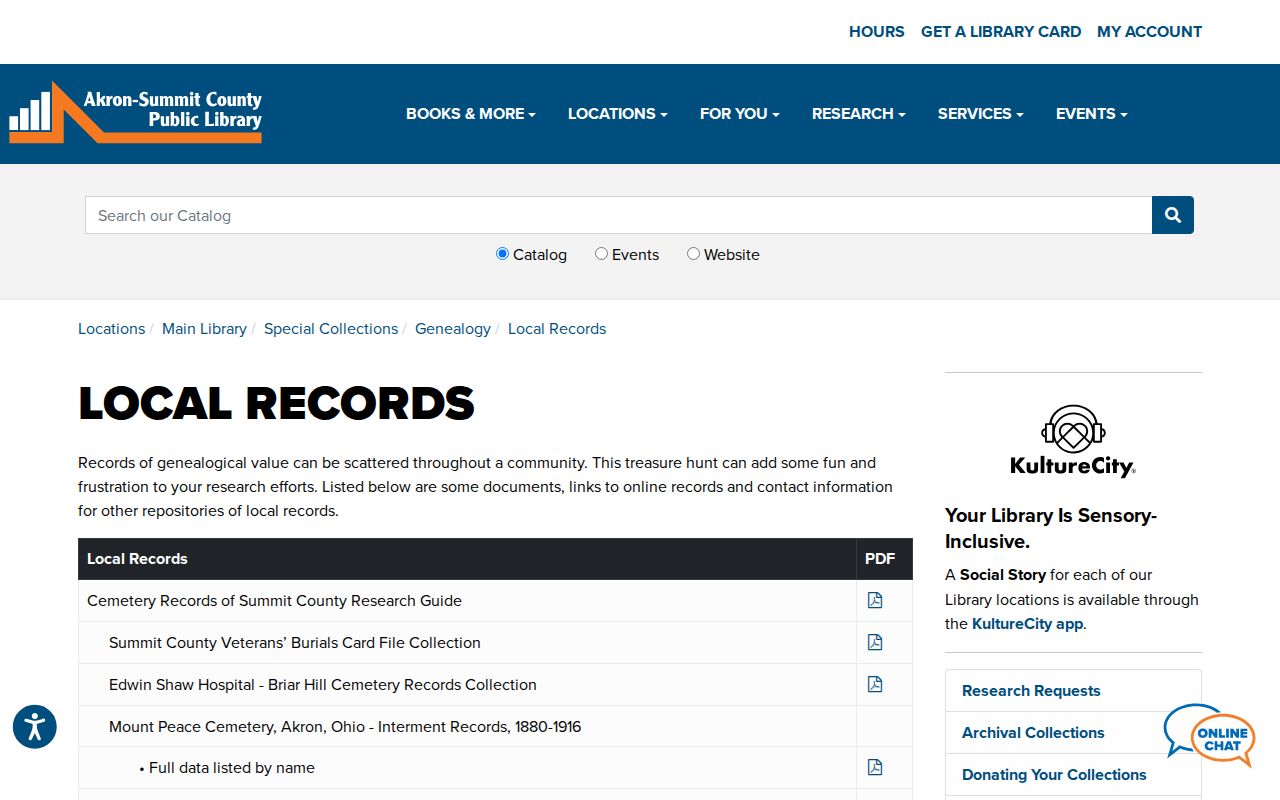
The records collection is a final check on a dated address trail, not proof that a missing name was absent from Akron.