
Akron City Directory Shelves
The Akron-Summit County Public Library Historic City Directories collection identifies its digitized Akron run as an address-and-name resource for Akron and nearby places. It spans identified editions from 1859 through 1969. That broad range does not mean every year survives. Several labels combine years in one edition, and the displayed list has gaps. Choose the volume nearest the date under review, then compare the preceding and following available editions rather than treating a missing annual title as a missing person.
The historical shelf has a different purpose from a current parcel record. Alphabetical listings can connect a name, address, spouse reference, or occupation at a point in time. Street and householder sections reverse the question, starting with an address. Later Haines volumes remain in Special Collections for address-first work, while telephone books add a later dated clue. Keep every source’s own printed date and place label.
The library collection page identifies the digitized directory route.
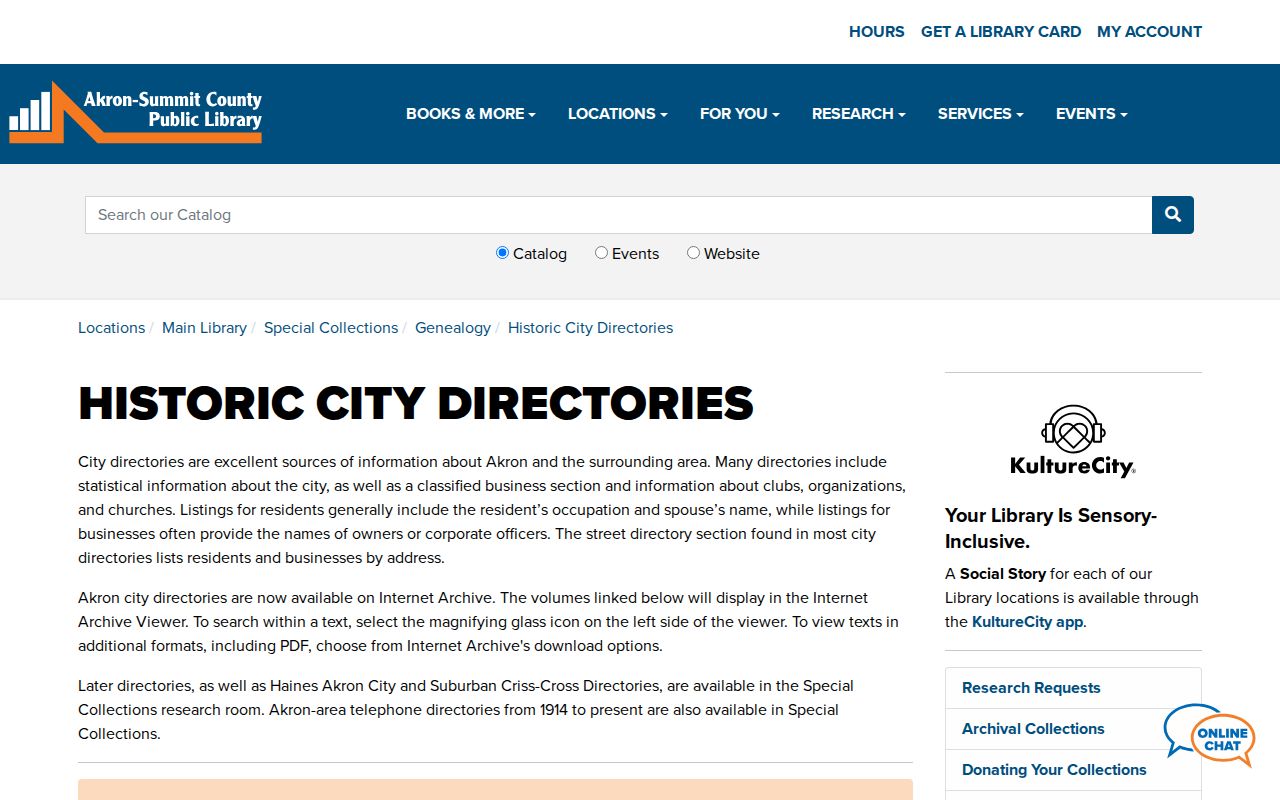
The collection view directs readers toward edition-by-edition searching instead of implying that one result covers an entire period.
| Collection | Years | Where Held | Access |
|---|---|---|---|
| Digitized Akron city directories | 1859-1969, identified editions | ASCPL and Internet Archive | Image/PDF viewer and multi-volume text search |
| Haines Akron City and Suburban Criss-Cross | Exact run not published | ASCPL Special Collections | In-person address-to-listed-person research |
| Akron-area telephone directories | 1914-present collection statement | ASCPL Special Collections | Historical contact and address clue |
| City-directory microfilm | 1871-1978 listed subset | ASCPL | Microfilm access; availability is incomplete |
Note: A directory gap is a collection gap, not proof that an Akron person left the city.
Akron City Directories Online
ASCPL points researchers to the Akron and Summit County Directories collection at Internet Archive. Its “Search text contents” option searches across volumes, and the magnifier searches within one volume. A surname search is a sensible first pass, but initials, punctuation, and scan errors can hide an entry. Test the surname alone, try an initial, and open the page image before recording an address or relationship.
The library list includes early titles such as 1859, 1868, 1871, and 1873-74, followed by numerous later editions. A multi-year label is one edition label, not a promise that annual editions are available. Read the edition’s title page and date, then preserve that exact citation. A later comparison can then test the same person without blurring the years.
University of Akron Digital Collections is another local digital-history route for maps, photographs, and context.
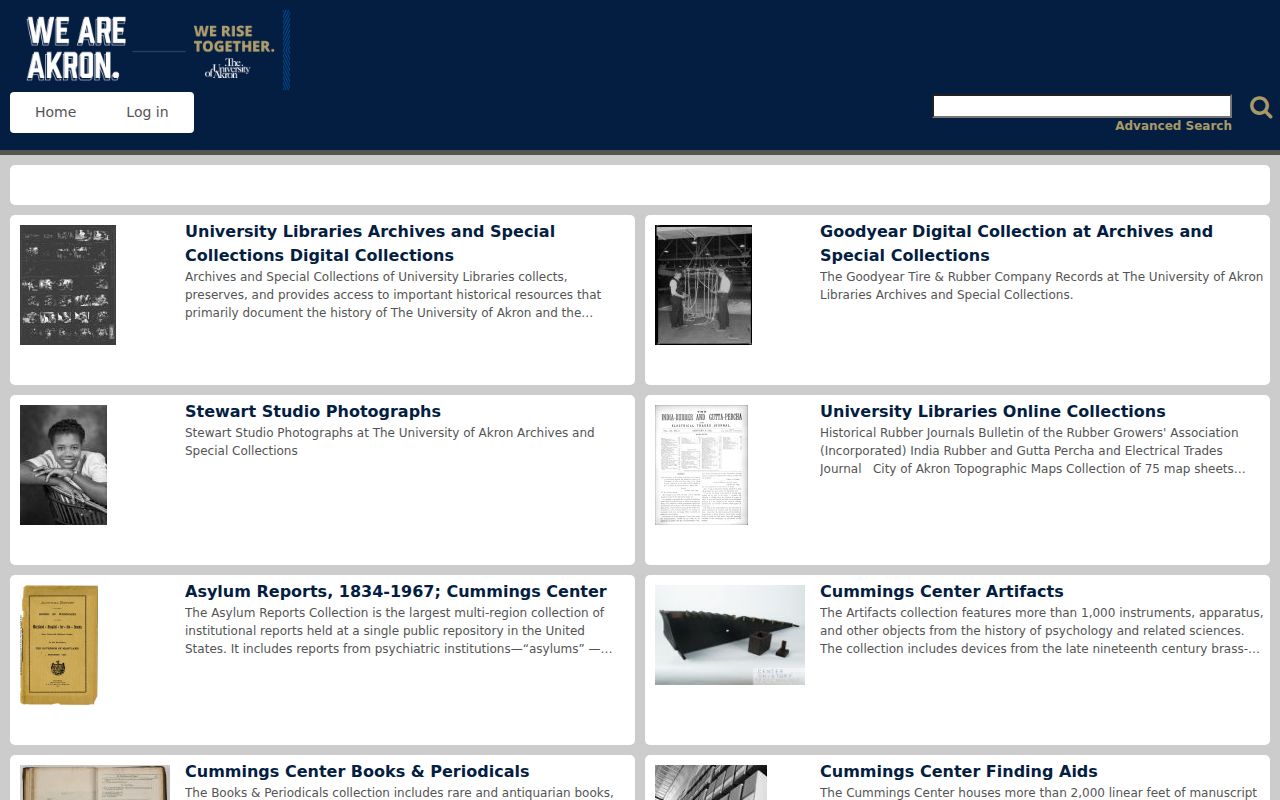
Digital archival material can add neighborhood context to a directory finding, but the printed entry remains the address-and-name evidence.
Akron City Directory Publishers
The University of Akron bibliography documents a succession of Akron publishers. C. W. Williams issued the 1859-60 Akron, Wooster, and Cuyahoga Falls directory. Hall Publishing followed with an 1868-69 general directory, Bailey with 1871-72, and A. R. Talcott with a 1873-74 Akron City Directory. Burch, Potter & Co. appears in 1875-76, followed by Burch Directory Company editions.
Later Burch volumes widened their title to include Cuyahoga Falls, Barberton, and Portage Lakes. The 1954-55 volume has separate street sections while its alphabetical material covers more than present-day Akron. A place qualifier printed in the book is therefore part of the evidence. Do not turn a name in a multi-city edition into a claim that the person was inside today’s Akron city limits.
Publisher changes also make a useful citation check. A Williams, Hall, Bailey, Talcott, or Burch title says which edition was consulted and distinguishes a historical city directory from a modern list with similar names.
Akron City Directory Research Desk
ASCPL Special Collections is on the third floor of the Main Library at 60 S. High Street. It holds later directories, Haines criss-cross books, telephone books, maps, yearbooks, microfilm, newspapers, and archival material. Posted hours are Monday through Thursday 10-8, Friday 10-6, Saturday 10-5, and Sunday 1-5. Closed-stack and archival material should be requested in advance; same-day archival requests are unavailable after 5 p.m. and on Sundays.
Research requests go to Special Collections at 330-643-9030. The library allows up to five obituary, article, vital, or print items per request, one request per month, with a stated turnaround of up to three weeks. Electronic delivery for the listed request types is free. Self-scanning is free, and patron copies cost $0.05 black-and-white or $0.25 color. These are access channels when an online volume is not enough or a microfilm page needs closer review.
ASCPL Local History gathers the library’s Akron-area materials.
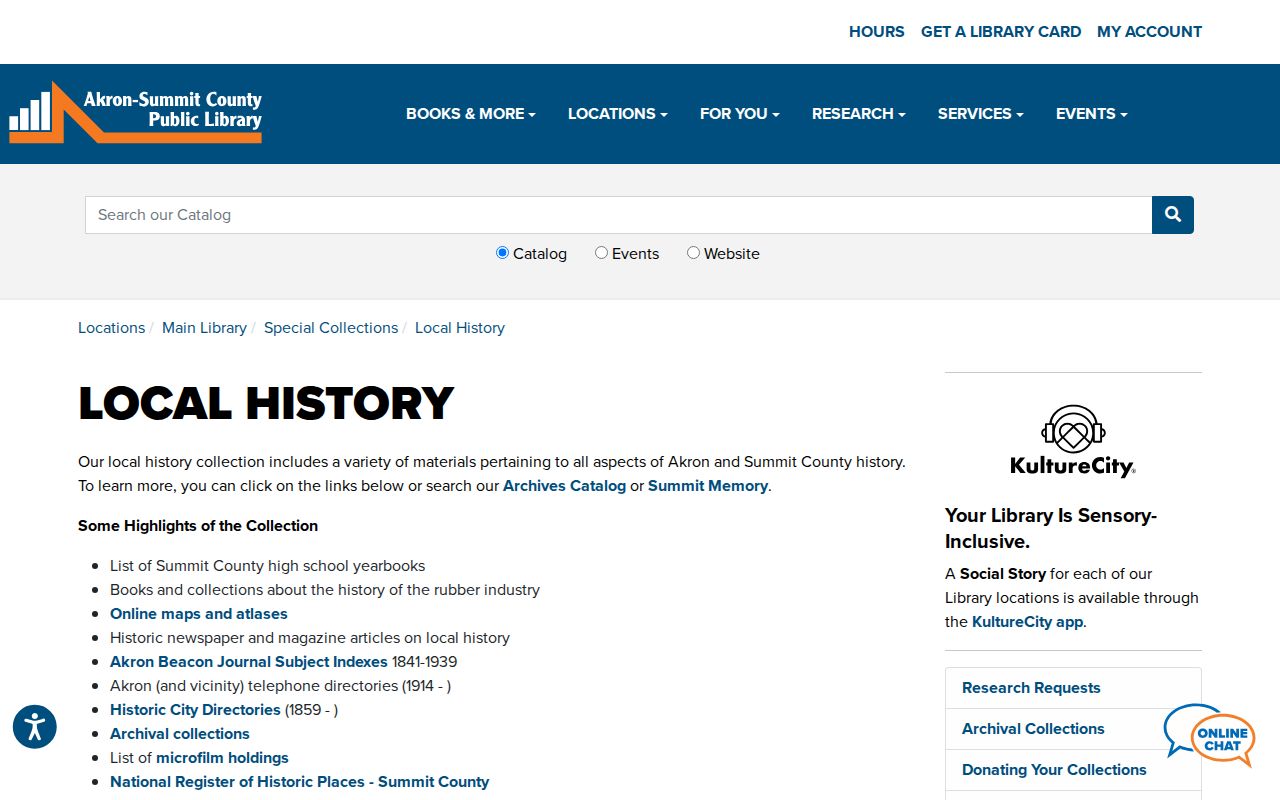
The local-history route helps when a directory entry needs support from a map, yearbook, obituary index, or archival record.
Reading Akron City Directory Entries
A city directory entry is a printed snapshot, not a complete profile. The 1954-55 Burch volume states that it includes alphabetical listings of male and female citizens over 16, a wife’s name in brackets after a husband’s name, business firms, a street and householder directory, owner-occupant designation, telephone number, and other sections. That statement describes the publication as a whole, so an individual line may not show every field.
Copy the spelling, abbreviations, address, and edition date exactly. The alphabetical section helps follow a person over time. The street and householder section tests an address from the opposite direction. Neither listing proves a present address or explains why a name disappears.
| Name | Printed name or initials; compare spelling across nearby editions. |
|---|---|
| Spouse reference | The 1954-55 Burch volume says a wife’s name may appear in brackets after a husband’s name. |
| Occupation | A work or business association when the edition prints one; preserve its wording. |
| Address | House number and street, checked against the volume’s street or householder section. |
| Owner-occupant mark | The Burch volume says it includes that designation; verify the edition’s key before interpreting a mark. |
- Criss-cross directory
- An address-order volume that moves from a street number to a historical listed person.
- Householder index
- The street portion of a directory, arranged to examine an address rather than a surname.
- Abbreviation key
- The publisher’s shorthand explanation, usually near the front; note it before interpreting an entry.
Akron City Directories, Wider Places
Akron’s printed directory geography changed with industrial growth and nearby communities. Ohio History Connection material records major rubber-industry milestones and rapid population growth from 1870 into the early twentieth century. Later Burch editions expanded their stated coverage into Barberton, Cuyahoga Falls, and Portage Lakes. This is why a historical city directory needs its edition title beside every result.
Neighborhood names are also date-sensitive. A printed address may be associated with North Hill, Highland Square, Ellet, Kenmore, Goodyear Heights, or Firestone Park in historical material, while a county parcel or postal label uses a different boundary today. Keep the original place qualifier, then use a map or legal description only to test an address change.
Note: An Akron directory’s place label belongs to its edition, not to a modern boundary assumption.
Akron City Directory Companions
Directories work best beside sources that answer a different question. The Akron Beacon Journal subject indexes cover 1841-1939 research, with partial early indexes before 1890. The Ohio Obituary Index route reaches Akron Beacon Journal series obituaries from 1937 forward. A citation can be requested from ASCPL rather than guessed from a name match.
Maps resolve different problems. ASCPL holds Akron Sanborn microfilm for 1886, 1892, 1916, 1920, 1923, 1930, and 1940, while the Library of Congress 1886 Akron Sanborn places selected sheets online. A Sanborn sheet can show a building footprint, use, and period street layout. It does not identify a directory’s listed people.
Akron City Directory Timeline
Akron’s directory sequence has several verified milestones. Summit County was organized in 1840, the first located Akron directory is 1859-60, and the digitized directory set reaches 1969. Telephone books begin in 1914 under the library’s collection statement. These dates help select the right format without inventing a record that has not been located.
- 1840: Summit County is organized; earlier research can lead to predecessor counties.
- 1859-60: The first located Akron directory appears under C. W. Williams.
- 1868 onward: Hall and later publishers document successive editions.
- 1914 onward: Akron-area telephone directories become a separate Special Collections trail.
- 1859-1969: ASCPL’s identified digitized editions provide an online historical run.
The dates are access markers, not a claim of uninterrupted annual publication. Check the edition list and microfilm list when a specific year matters.
Tracing Akron City Directories
For family history, begin with the earliest likely alphabetical listing and record each line exactly. Compare the address, spouse reference, occupation, and initials in the next available edition. Then open the same edition’s street section or a Haines criss-cross volume to test the address. The Akron previous residents record trail uses these address clues with deeds and parcel history rather than treating a directory line as an ownership record.
- Find the surname and initial in the closest available Akron city directory edition.
- Write down the printed address, relationship reference, occupation, and abbreviations.
- Compare the prior and next available edition, noting changes without assuming a reason.
- Check the street or criss-cross section to test the address in the same period.
- Pair intervening years with the released federal census, an obituary citation, estate material, or a Sanborn sheet when that source fits.
A disappearance can reflect a move, a death, a changed listing practice, or a collection gap. Test the next source with its own date rather than selecting the most convenient explanation. Note: Preserve edition dates and printed spellings so another researcher can retrace an Akron directory result.