
Finding Akron Residents
Every Akron record search starts with one clear question. Need a present-day parcel? Use the property record. Chasing an old address? Work from the recorded instrument to a dated street directory. Cases and family events belong to the court or health custodian that holds the file. A name hit is only a lead. It gains strength when a second identifier backs it up, whether a middle initial, a record date, a parcel number, a case number, or a legal description.
There are hard limits here. A parcel names an owner or a tax-contact field, not everyone at the address. A voter entry is a controlled registration record rather than a neighborhood roll, and court indexes can omit sealed material, so the best result states only what the source confirms.
- Start with the county property search when you have an Akron address, parcel, or recorded owner name.
- Use Ohio's voter lookup when a registered name and Summit County can narrow the right person.
- Check a recorded document for a party role, document date, and legal description.
- Move to Akron directories and library collections when the question is historical.
- Ask the proper custodian for an identified existing record when the public web does not supply it.
Akron Resident Records Offices
Akron keeps its resident trail split across several offices. The Summit County Fiscal Office holds property records and the Recording Division's instruments. The Clerk and Probate Court run separate court systems. Summit County Public Health serves as the vital-record counter, and the library keeps the historical shelf. The Akron street directory follows that chain in detail.
Summit County Recording Division
Fiscal Office, recorded instruments and copy procedures.
330-643-2712
Summit Property Tax & Appraisal
Fiscal Office parcel, owner, address, and tax-year records.
Summit Board of Elections
1050 E. Tallmadge Ave., Akron, Ohio 44310.
330-643-5200
Akron Property Search Fields
Start property questions at the Fiscal Office interface. It offers parcel, route, owner, address number, street, ZIP, and tax-year fields, and results sort by parcel, LUC, route, address, owner, or tax year. One caution matters. A broad non-exact search can return 500 records. Narrow the street or address number. Then select the right tax year and review each parcel on its own, because a result list is not a list of residents.
| Property field | How it helps an Akron search |
|---|---|
| Owner | Finds the recorded tax-record owner, subject to the selected tax year. |
| Address No. and Street | Narrows an address to a parcel record. |
| ZIP | Filters property records by a five-character ZIP field. |
| Parcel or Route | Provides a more durable property key after a result is selected. |
Source view: the Summit property search shows the public entry and its access notice.
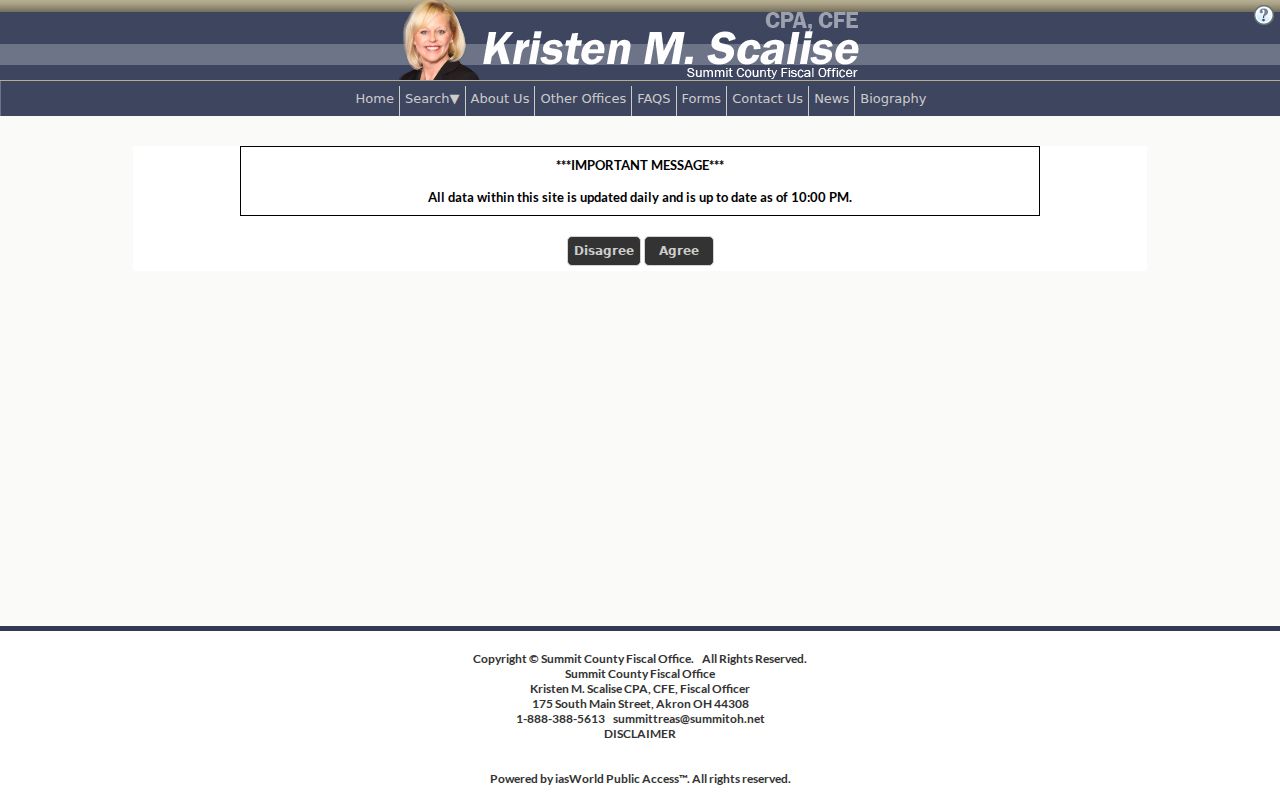
The interface answers address and parcel questions. It does not prove that everyone tied to a property lives there.
Akron Deed Index Eras
Akron's recording route has a local date divide. The Recording Division says browser-searchable documents begin in 1988. The separate Index Book Archive Viewer, known as IBAV, reaches from 1840 through 1988. Older work can also use the fourth-floor public computers, a counter or mail-copy request, and the library's historic deed-index material. An empty modern-web result may therefore show an era mismatch, not an absent deed.
A deed trail is built from the current parcel to the latest instrument, then from the seller to the seller's earlier acquisition. Record the grantor, grantee, document number or book and page, recording date, instrument type, and legal description. The index is a guide, so spelling variants and the actual document image or copy matter.
Source view: the official Summit recorded-document index is the current web entry.
For older Akron property history, carry the legal description across the 1988 handoff instead of relying on a street number alone.
Note: Summit County was organized in 1840, so an earlier tract may require predecessor-county research in Portage, Medina, Stark, or Trumbull records.
Akron Voter Record Limits
Ohio's individual voter tool asks for first name, last name, and county. A street-name control appears when a result needs narrowing. Pick Summit County for an Akron person search. State law puts selected fields online, including name, birth date, residence address, precinct, registration date, voting history, and last activity, subject to exclusions. Voting history shows an election or ballot type, never a vote choice.
Not everything is public. Phone, email, Social Security data, ID numbers, confidential voter records, protected worker addresses, and similar material stay off the web fields. The state DATA Act snapshot portal is a separate channel for county files and limited election-period snapshots. Neither route gives a street-by-street household list.
Source view: Ohio Voter Information offers the county lookup. Use a voter result as one dated confirmation, then compare it with a record of a different purpose.
Akron Court Name Routes
Court searching splits by court and case type. Akron Municipal Court runs its own case and citation search. The Summit County Clerk's records selector covers domestic, civil, criminal, appellate, and naturalization records, with naturalization search set for 1850 through 1991. Probate eServices stands separate and often fits estate, guardianship, marriage-license, or name-change leads. Case numbers and party roles separate same-name people.
Public images are not guaranteed. Probate notes that case numbers from before December 29, 1999 must be searched by name, and confidential entries never display. A docket shows a case connection. It is not a complete personal record.
Source view: Akron Municipal Court's search interface presents its public case and citation modes.
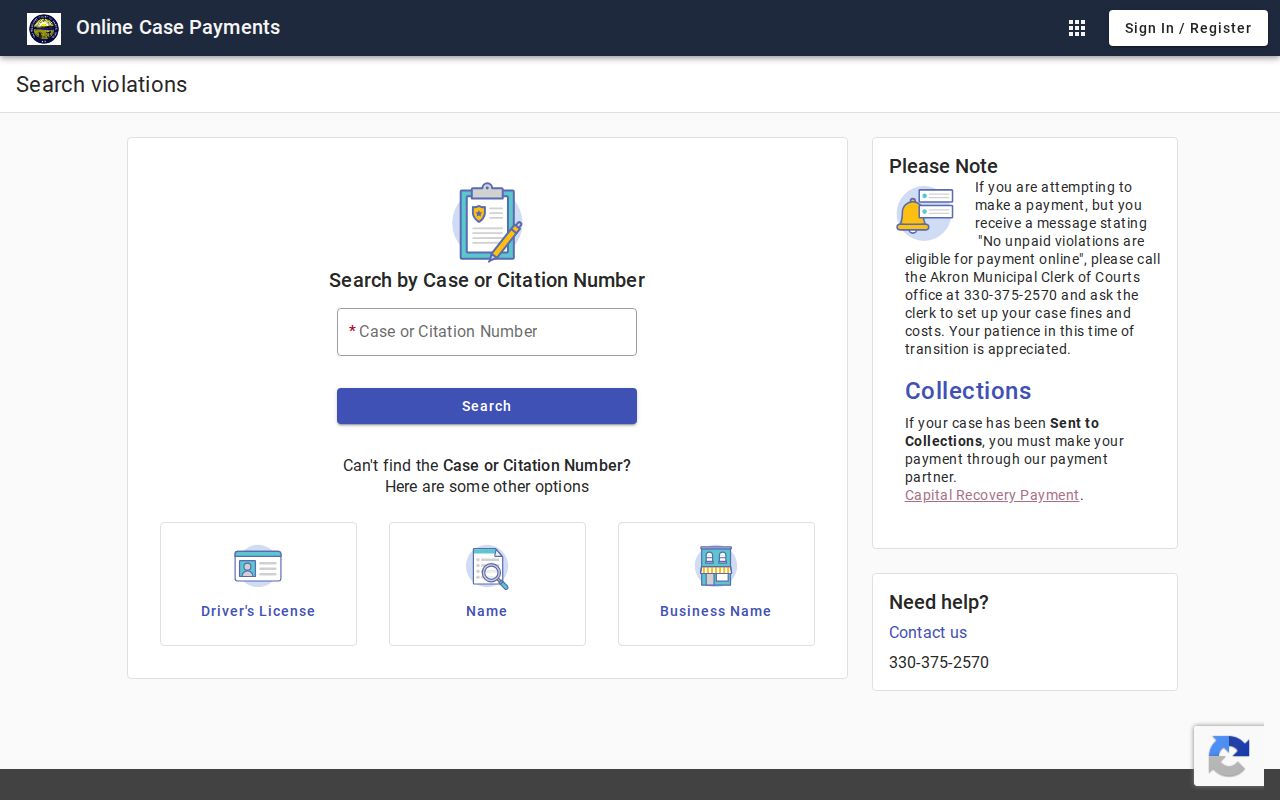
Match the division and the record date before you tie any court hit to an Akron resident. Names repeat, and the wrong division leads to the wrong person fast.
Source view: the Summit County Clerk records selector sorts court divisions and includes a naturalization route of its own.
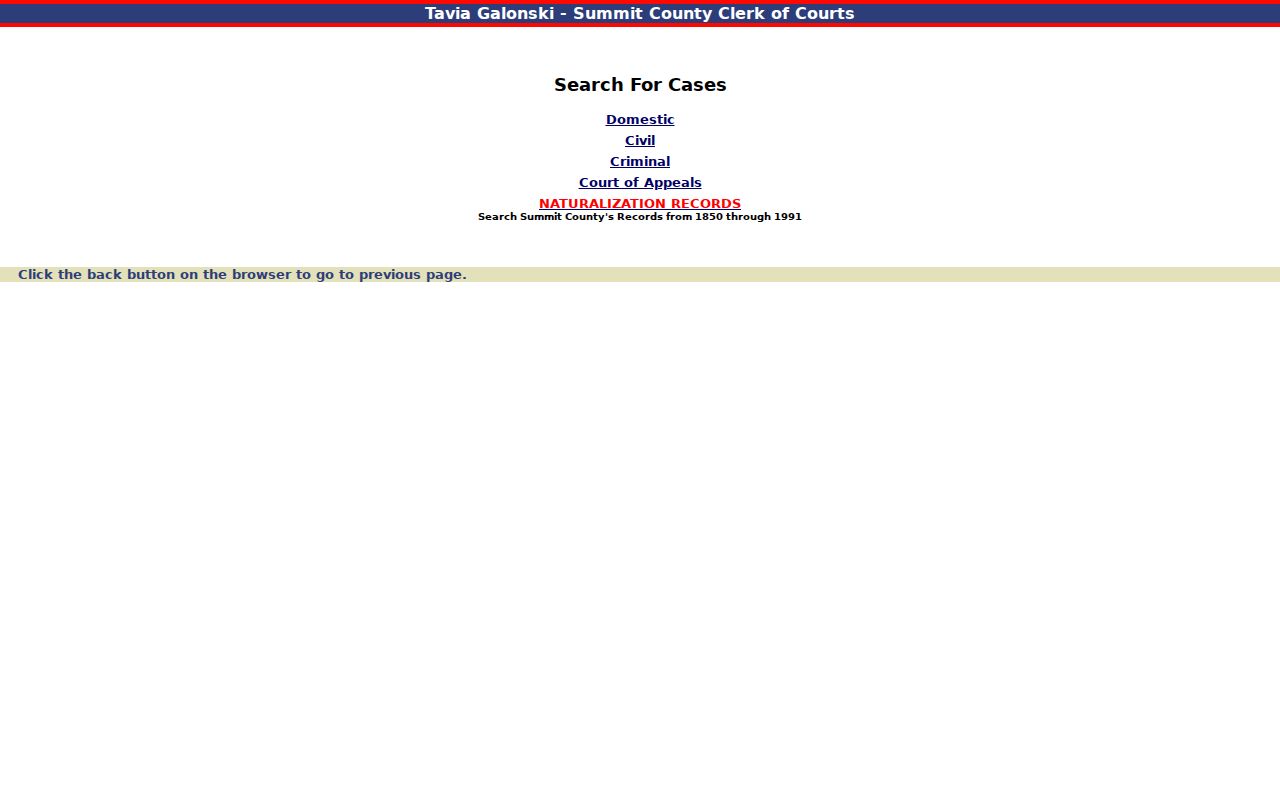
The Clerk screen asks for a division first. Pick the record category before assuming one name search covers every Summit court file, because it does not.
Akron Vital Record Rules
Summit County Public Health issues certified birth certificates for every Ohio county. It issues certified death certificates only for deaths within Summit County. Ohio keeps birth, death, and fetal-death records open to the public. The health department allows anyone with the locating facts to order a certified copy. Marriage licenses live with Probate Court. Divorce case records sit with the Clerk of Courts.
The closure rule here is narrow, not a blanket historical seal. Under Ohio Revised Code 3705.23, a decedent's Social Security number stays off a certified death certificate for five years. A qualified requester may still obtain it. That requester must show identification and proof of authority. One more caution applies. A name missing from a vital index never proves the event failed to occur.
Source view: Summit County Public Health's vital-record information lays out ordering steps and who qualifies.
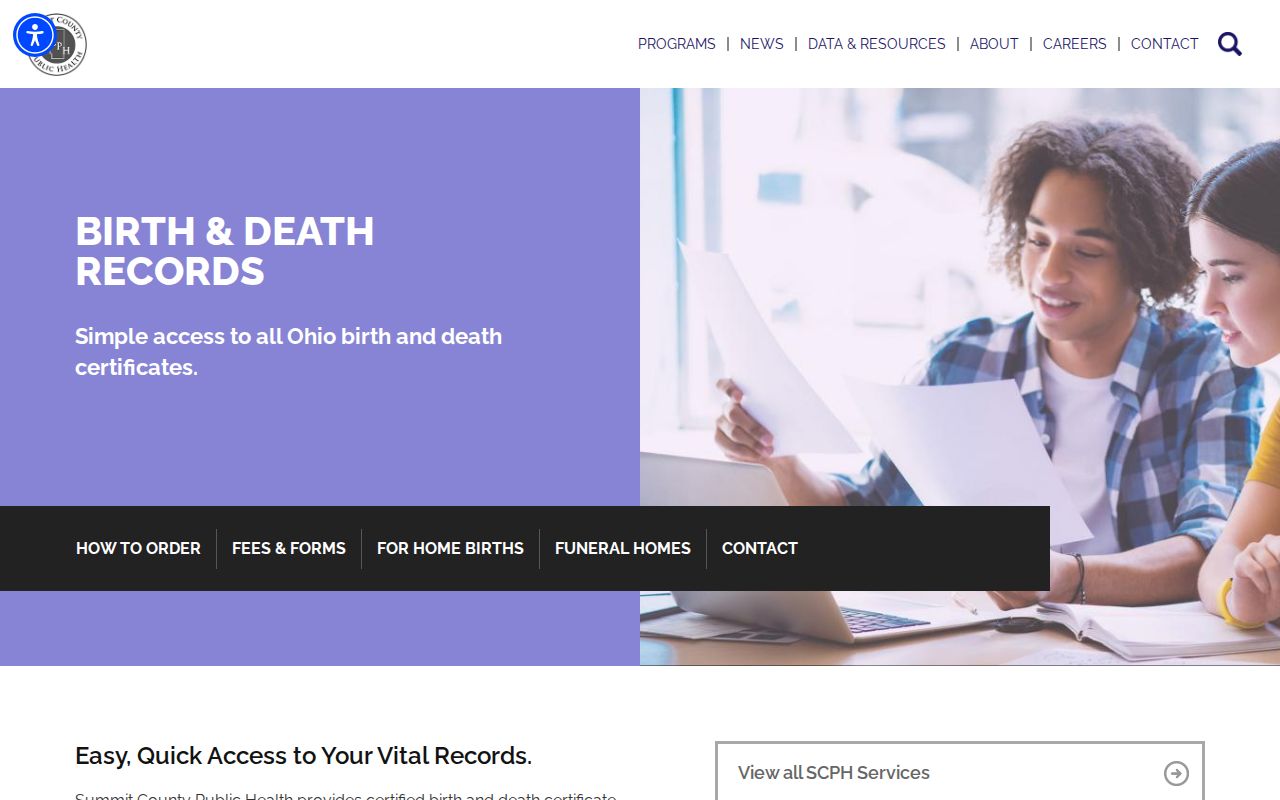
Use vital records to answer a dated family or identity question, then confirm the copy with the issuing custodian.
Current Akron Resident Directories
Akron keeps no single master list of its residents. What exists instead are narrower public sources that each answer one question. The property portal connects an owner to a parcel. Recording ties a person to an instrument. Voter rolls register an elector. A court file names a party to a case. Business and credential tools can corroborate a license or filing. Neither one proves where someone lives in Akron.
| Akron source | What it can confirm | Custodian | Access limit |
|---|---|---|---|
| Property and tax record | Owner, parcel, situs, mailing fields | Summit Fiscal Office | Owner or addressee is not every resident. |
| Recorded instrument | Grantor, grantee, filing, legal description | Recording Division | Web 1988 forward; IBAV for 1840-1988. |
| Voter lookup | Public registration fields | Ohio and Summit BOE | Name plus county, with statutory exclusions. |
| Court docket | Party and case connection | Municipal, Clerk, or Probate Court | Sealed and confidential entries stay unavailable. |
| Professional credential | License status or identity detail | Ohio boards | Professional details are not residence proof. |
The Akron resident lookup page uses these separate rolls for a one-person verification route.
Akron Library Record Trails
A name or address trail sometimes moves into the past. Akron-Summit County Public Library Special Collections is the local counterweight to current county portals for exactly that work. Its holdings span many formats. The collection includes digitized city directories, later directory volumes, telephone books, obituary and subject indexes, maps, yearbooks, microfilm, and local-record guides. The collection cannot turn a historical listing into proof of where a person lives now. It does preserve the details of a given year. An address, a spelling, a spouse notation, an occupation, or an institutional connection survives for the year printed.
For an heir or family-history question, an Akron Beacon Journal obituary index can supply a citation. Probate estate material may then show a fiduciary or relationship trail. A former-classmate question belongs in dated yearbooks and directory volumes. The library asks that closed-stack or archival material be requested in advance. It limits some requests to five items. Service can take up to three weeks. That is a real access route when an online index runs thin.
Note: The Special Collections research room sits on the third floor at 60 S. High St., and its historic sources have separate coverage and gaps.
Akron Address Geography
An Akron mailing label, a county parcel, a postal ZIP, and a historic directory place name are different geographic facts. Each describes a different kind of place. The City GIS ZIP layer includes core 443xx values and surrounding 442xx contexts. Its polygons cannot prove a specific delivery ZIP or municipal boundary. The Postal Service address tool is the proper check for delivery information. A Fiscal Office property record uses its own situs, mailing, and legal-description fields for separate purposes.
Historical sources add another layer. A 1954-55 Burch directory covered Akron, Barberton, Cuyahoga Falls, and Portage Lakes in an alphabetical section. It retained street sections as well. For any old address, preserve the city qualifier exactly as printed. Compare it against the parcel or map jurisdiction of that era. Before 1840, research may also move into predecessor county records. Summit County had not yet been organized.
This distinction is especially useful when a result appears nearby. It may not match the modern street number or current city boundary.
Akron Resident Directory Terms
Records use different labels for different kinds of evidence, and those labels mean what they say. Reading them literally keeps an Akron search from drifting into claims the record does not make.
- Parcel
- A taxed piece of land tracked by the Fiscal Office, often with a parcel or account identifier.
- Situs
- The property location field. It is different from a tax mailing or correspondence address.
- Index
- A finder tool that points to a record. It may omit material that appears on the original document or image.
- Criss-cross directory
- A historical directory arranged from address to listed occupant, held in Akron library Special Collections.
Ohio runs its own credential system for many professions. Ohio eLicense serves that purpose, and its records stay narrow.
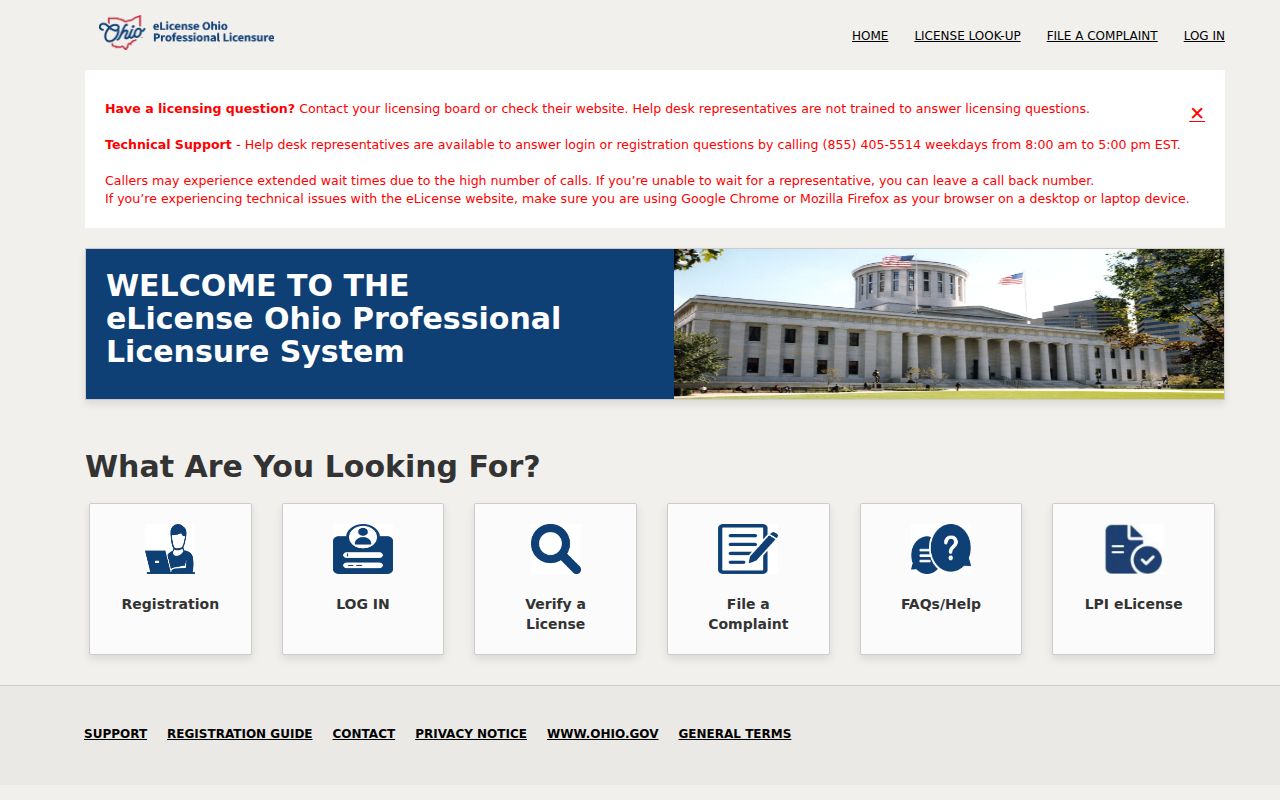
A license lookup answers one question: who holds a credential. Its status or address fields do not work as a current household listing for the Akron residents directory.
Historic Akron Resident Directories
The Akron-Summit County Public Library holds digitized Akron city-directory editions from 1859 through 1969. Later volumes, plus the Haines Akron City and Suburban Criss-Cross books, sit in Special Collections. Akron-area telephone directories have a documented collection statement starting in 1914. Every one of these is dated evidence. That makes them strong for family history and address continuity, not for present whereabouts.
Publishers changed hands as Akron's urban area grew. The documented line runs through C. W. Williams, Hall, Bailey, Talcott, and Burch. A 1954-55 Burch volume lists an alphabetical section, a street and householder section, owner-occupant notation, and a telephone list. The full collection and how to read it belong on the Akron city directory page.
Akron Public Records Requests
Ohio's Public Records Act gives you a right to see existing records. Ohio Revised Code 149.43 spells out the rule. It does not make a clerk your personal researcher. No office has to build a new report. A focused request names the item and the date range. It can also cite the record number, the address, or the case division. The Executive Office lists its own public-record request route. The Clerk keeps a separate form for its records.
Send each request to the custodian who owns the record. Copies go through the Recording Division. Court records sit with the Clerk or the Probate Court. The Board of Elections covers registration procedures. The health department covers vital copies, and Special Collections holds historic material. That division of work cuts delays and makes any Akron answer easier to check.
Source view: Ohio Revised Code 149.43 states the Public Records Act.
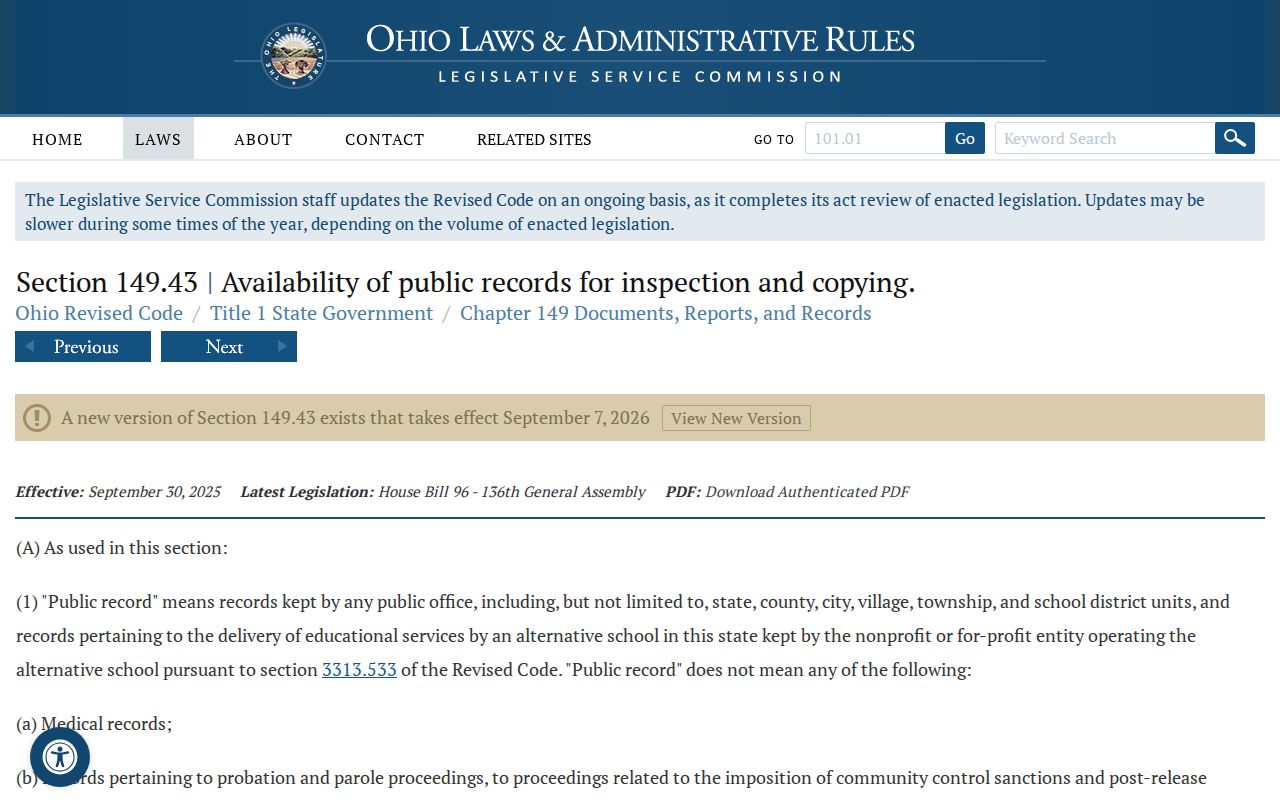
The statute works best for a narrow request. Use it alongside the office's own search and copy steps, not as a replacement for them.
Akron Privacy and Scam Checks
Public access has limits. Ohio Safe at Home shields qualifying survivors. It offers a substitute address and a confidential voter record. Voter exclusions, sealed entries, restricted motor-vehicle data, and redacted Social Security numbers can all thin a public result, and so can the record type, a protection, the era, or an error. A gap is not proof of absence from Akron.
Lawful use. Akron records are for personal research, family history, civic transparency, and confirming an identified record. Do not use them to stalk, harass, intimidate, or harm anyone.
A quick fraud check helps here. The Fiscal Office warns of businesses offering paid copies of a deed. These outfits pull the document from public records. Skip the solicitation. Get your copy straight from the Recording Division, and compare the document before trusting an unexpected notice.
Summit County's 2026 jury-duty scam notice makes the same point. Threats that demand immediate payment deserve a check through official channels.
Source view: Ohio's ODRC Offender Search shows how narrow an official source can be. It also warns that a supervision location can go stale.
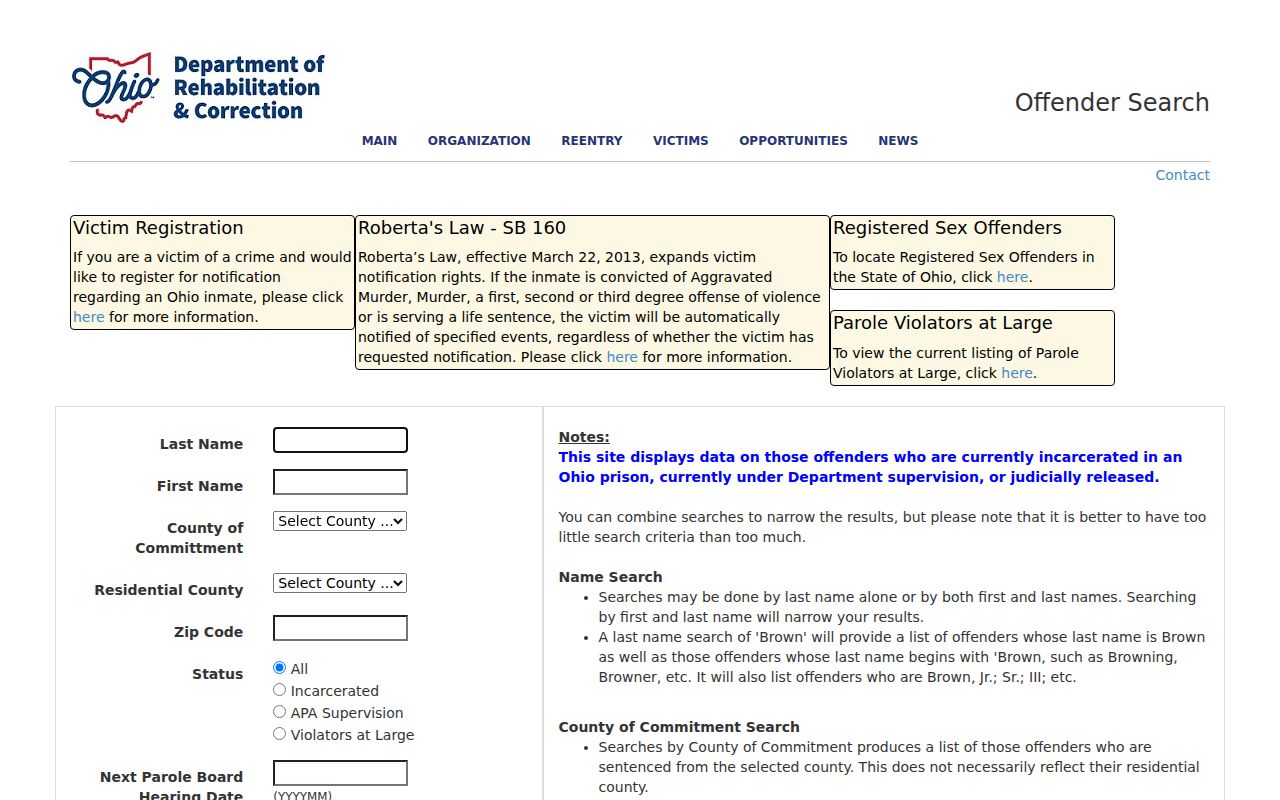
Treat every record within its stated scope. Verify any time-sensitive government notice with the office it names.